South African Youth
The United Nations (UN) has highlighted the importance of the imagination, ideals and energies of young men and women in continuing the development of their societies. The youth are central to social change, economic development and technological innovation. The UN identifies a paradox that the youth currently face: to seek to be integrated into the existing society or to serve as a force to transform it. Although their future may be uncertain, the youth do represent a hope for existing societies that they will lead the change and transformation of many struggling societies. The youth of South Africa face many daunting challenges that the government, societies and the youth themselves struggle to deal with.
- Lack of Employment
Some of the most pressing challenges include those of the lack of employment of the youth. According to an August 2011 article by the South African Broadcast Corporation (SABC), 42% of youth between the ages of 18 and 29 are unemployed. South African youth unemployment has progressively become an urgent social and economic challenge as matriculates are left with limited choices after their high school academic career. Severe lack to basic services appears to be one of the chief reasons for the youth not having a wider range of choices after matriculating. A 2008 survey by the Organization for Economic Cooperation and Development (OECD) ranked South Africa as the worst regarding unemployment of persons between the ages of 15 and 24, followed by Spain with approximately 25% and Italy nearing 20%. The youth account for one quarter of the world’s labour force and constitute one-half of those unemployed. The high youth unemployment rate in South Africa is often the result of a lack in skills and experience. This means that despite these young people having had education at the required levels, these remain insufficient to secure them employment due to the overriding required skills.
- HIV/AIDS
Former South African president and world icon, Nelson Mandela once said “AIDS is not a disease it’s a human rights issue” and this quote has been echoed by many worldwide. Indeed, the issue of HIV/AIDS – especially amongst the youth – is one that cuts across race, culture, class and gender and is plaguing the South African nation and threatening the future of these youngsters. South Africa is the world’s leader in the amount of cases of people living with this disease. According to Opportunity in Crisis, a UN Report of 1 June 2011, an estimated 2500 youth are newly infected with HIV every day. The report continued to reveal that amongst these youth, adolescent girls and young women are at a higher risk of being infected with HIV as a result of biological vulnerability, social inequality and exclusion. South African women are also most affected by HIV/AIDS with a reported 77% of them between the ages of 15 and 24 being HIV positive.
- Alcohol and Substance Abuse
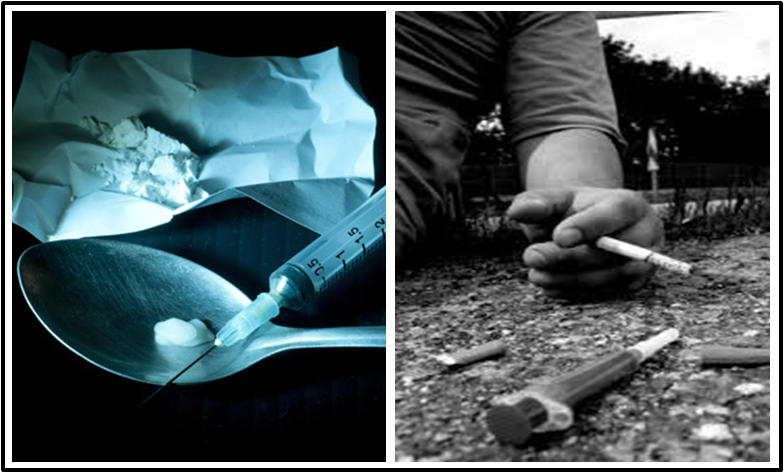
Quite commonly referred to as a global phenomenon, alcohol and substance abuse is one of the fundamental challenges facing South African youth. This challenge is especially difficult to deal with as it leads to crime, gangsterism, domestic violence, school drop-outs, unemployment, dysfunctional families, suicide and deaths at a young age. Alcohol and substance abuse begins as early as during primary school education amongst children as young as 8 years old. Club drugs appear to be entrenched in youth culture where the youth are used as vulnerable targets for illegal drug trafficking. Many youngsters are under the impression that alcohol and drugs give them a sense of invincibility and confidence whereby they feel that during the time of intoxication they are ‘on top of the world’. This opens doors to possible rape, violence, unintentional murders and suicides amongst others.
- Teenage Pregnancy
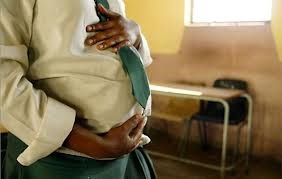
This is yet another huge problem faced by South Africa and like HIV/AIDS cuts across racial, cultural and class barriers. David Harrison, Chief Executive Officer of LoveLife – South Africa’s largest youth-targeted HIV/AIDS campaign – said that one in three girls has had a child by the time they reach the age of twenty. In a country that is currently battling to deal with HIV/AIDS, the amount of teenage pregnancies is indeed alarming and bothersome. The South African Medical Research Council (MRC) revealed that 16% of pregnant women under the age of 20 were HIV positive. While the teenage pregnancy rates are not very similar in different parts of South Africa, there are specific areas where the teenage pregnancy rates are incredibly high. In some schools, only about 6 girls fall pregnant in a school of 1200 whereas in other schools about 60% to 70% of all pupils are pregnant. Teenage pregnancy rates are usually associated with the level of gang activity, coercion and substance abuse. Other influences of teenage pregnancies are peer pressure whereby teenage girls feel that they will only be regarded as women once they prove their fertility.
Youth in Kwa Dukuza
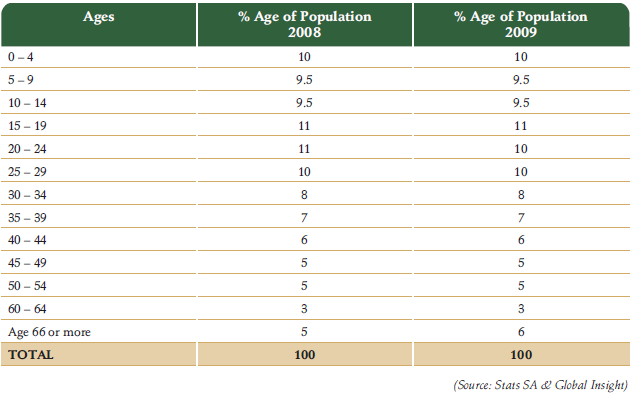
The youth in Kwa Dukuza form a large base with the total number of youth under the age of 19 years consisting of 40% of the population and those under the age of 34 accounts for 68% of the total population.
Table of Percentage Age of Population
The youth in Kwa Dukuza form a vital component of the bustling town and constant efforts are being made by the local government to enrich and empower Kwa Dukuza’s youth. Some of the existing resources include a large number of schools, colleges, the Sappi Resource Centre and local libraries and sporting events supported by the Kwa Dukuza Municipality and Mayor, Ricardo Mthembu. While these resources have been of much assistance to Kwa Dukuza’s youth, remaining issues continue to permeate the town. Many youth in Kwa Dukuza struggle with drug use, peer pressure, misguidance, substance abuse, teenage pregnancies, violence, juvenile delinquency, attempted suicides and suicides. Reigning supreme are the issues of teenage pregnancies, alcohol and substance abuse.
An analysis of the reasons for attempted suicides and successful suicides revealed the following: relationship difficulties, family problems, substance abuse, financial struggles and depression. Most youth attempting suicide have no-one to talk to about neither their problems nor any role models to emulate. As Kwa Dukuza’s Mayor, Ricardo Mthembu has been vocal about the state of teenage pregnancy in the town. He describes teenage pregnancy as being critical to the youth’s future and as a pressing issue of concern. Reports from the Department of Health of the iLembe District reported that there were 785 teenagers who were pregnant in July 2012. A commonly held belief by the youth of Kwa Dukuza is that there is nothing for them to do in our town. They therefore turn to activities deemed as being ‘cool’ in order to entertain themselves.
The Kwa Dukuza youth face a huge challenge in terms of education and skills. From the total population of Kwa Dukuza, 26% have matriculated or achieved a Higher Education Qualification. Within the Kwa Dukuza Municipality, 80% of the population has had some form of schooling from primary education to tertiary level. Although this is a positive statistic for Kwa Dukuza as it suggests that the town has a skills base that requires minimum training, Kwa Dukuza still faces a challenge in that it lacks an institution for higher learning in the area. The nearest institutions that provide this are located in the eThekwini area or at Mandeni. Due to many constraints faced by the youth of Kwa Dukuza, the main challenge being lack of sufficient funding, it is difficult for the youth to receive the higher education that they desire. Below is a table that illustrates the education and skills levels.
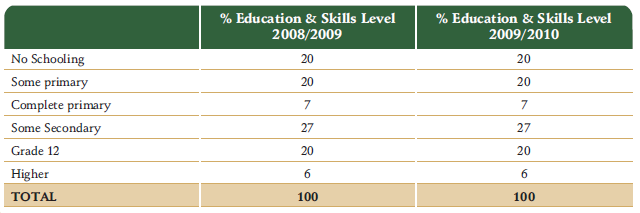
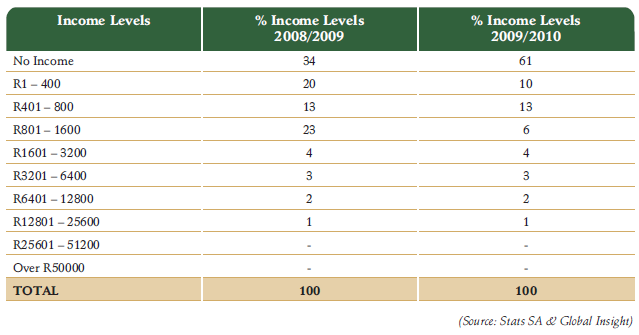
Of the total population, 33.5% are employed under the elementary occupation with approximately 8.8% of those who are employed falling under service workers. The majority of those who are employed fall under the elementary occupation both in the district as well as the local level. When taking a closer look at the table below of the skills levels, it is alarming that a very small percentage of young adults occupy professional occupations. This is linked to the education and skills challenge that the Kwa Dukuza youth are facing. When the youth do not receive adequate education and develop useful skills, they face difficulties in finding jobs that will sustain them in the future. In addition, 61% of the Kwa Dukuza population, including children and housewives, do not earn an income. Also, 13% of the employed earn between R401- R800. Kwa Dukuza experiences high levels of poverty as studies have revealed that approximately 90% of the employed earn below the poverty line which is R1600. These challenges therefore need to be immediately addressed in order to avoid this ripple effect from occurring in the future.
Table of Skills Levels
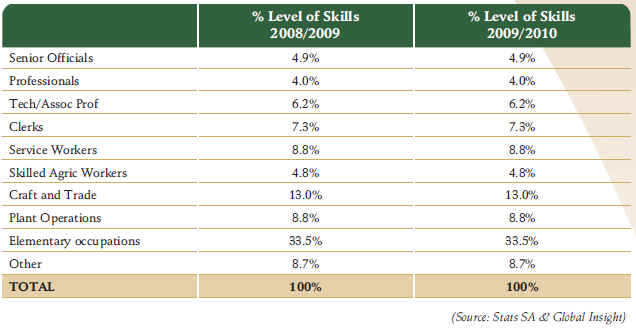
Table of Income Levels of Kwa Dukuza
Considering the above as well as the many unmentioned challenges faced by South African and more specifically Kwa Dukuza youth, it is evident that as societies seek to develop, they should place the youth at the foreground of global social, political, technological and economic developments. They should also mobilize the youth by gaining unique perspectives and innovative transformational ideas. In order for the youth to develop these transformational developments, it is vital that they have a clear and distinct vision of a new and improved society and world. In order for this to occur, the youth must have a firm foundation on which to build their vision. Unfortunately, many youth today are misguided by the ills of this world and this is one of the main reasons for the lens through which the youth see the future being filled with a vagueness and uncertainty. It therefore remains society’s responsibility to steer the youth towards a more vivid and assured future.